A typical Kedarkantha trek itinerary runs five days: drive to Sankri, camp at Juda Ka Talab, camp at base, summit, then drive back. The route is about 20 km round trip, the summit stands at roughly 3,810 m, and summit day usually starts between 2 and 4 a.m.
At about 3 a.m. on summit morning, a Kedarkantha camp sounds the same on most batches: zips, boots being laced, someone asking whose headlamp is flickering. The rest of the Kedarkantha trek itinerary is steady walking through forest and snow, and summit morning is the one part that bites. That is why the order of the camps matters more than the distance.
The standard Kedarkantha trek day by day: drive from Dehradun to Sankri, walk to Juda Ka Talab, walk to the base camp, climb the summit and come back down, then drive out. The round trip is roughly 20 km over 4 to 5 days. Sankri sits at about 1,950 m, Juda Ka Talab at about 2,750 m, the base camp at about 3,400 m and the summit at about 3,810 m. Winter is the season, with the best window usually December to April.
Kedarkantha Trek Itinerary Day by Day
Day one is the drive. Dehradun to Sankri takes about 9 to 10 hours by road via Purola and Mori, with chai halts and a lunch stop that most groups end up remembering better than the scenery. Sankri sits at about 1,950 m in Uttarkashi district, Uttarakhand, and the first night is spent there with a hot dinner and an early sleep. A Tripwaley batch boards in Dehradun and Delhi, so your own drive depends on where you join.
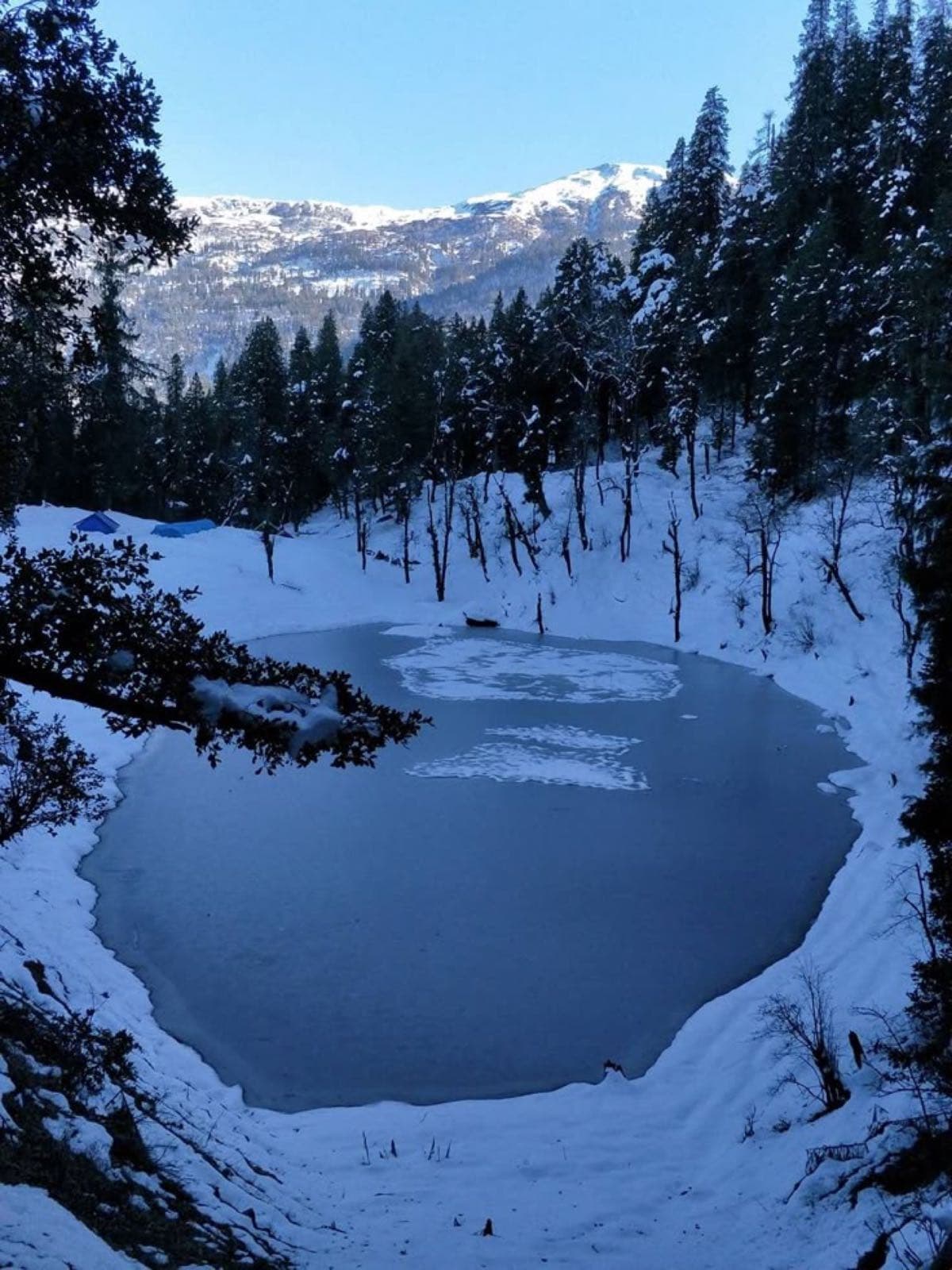
Day two is the first real walk, from Sankri to Juda Ka Talab at about 2,750 m. You climb roughly 800 m through forest, and the pace is deliberately slow so the body gets a gentle start at altitude. Juda Ka Talab is a small lake that can freeze over in the cold months, and camp is pitched close by. Our Kedarkantha group trips follow this same rhythm: short, steady days first, the hard morning last.
Climbing from Juda Ka Talab to the Kedarkantha base camp at about 3,400 m on day three adds another roughly 650 m. The trees usually thin out, the views open up and the air gets noticeably colder by afternoon. Camp is set here on purpose, because sleeping at the base shortens the summit climb the next morning and lets you get back down in daylight. Night temperatures at these camps can fall to about -5 to -10 C.
Summit Morning Before Sunrise
Summit day starts around 2 to 4 a.m., depending on the batch and the weather. Tea and a quick snack, headlamps on, and then a slow line of lights moves up the slope. Fingers go numb first on most batches, so a thin inner glove under a thick outer pair matters more than any fancy gear. Most people walk quietly, because saving breath beats chatting at this height.
The summit stands at about 3,810 m (12,500 ft), and on a clear day the views take in Swargarohini and Bandarpoonch. The early start is meant to put the group up there near sunrise, but clouds do not always cooperate, and a good captain will tell you honestly if the weather means turning back. For a traveller’s own account, read this Kedarkantha winter trek experience. Photos from the top tend to look warmer than the summit actually feels.
After the summit, the descent starts quickly, because wind and cold do not improve with time. Most batches come back to the base camp for a hot meal and then keep walking down. Depending on the plan, the group can reach Sankri on the same day, which makes summit day the longest of the trek and the one that leaves knees complaining. The total across all days is roughly 20 km round trip, so the long day matters more than the number.
Driving Back and Buffer Days
Back in the vehicle on the last day, the batch drives from Sankri to Dehradun, again about 9 to 10 hours via Mori and Purola. Everyone is tired and slightly sunburnt from snow glare, and most people sleep through the second half. The group chat usually fills with photos before the road flattens out. Dehradun is where the trip ends, so check how you are getting home from there before you book anything.
One thing people rarely say out loud: do not book a same-night train or flight out of Dehradun. The drive can run late for reasons nobody controls, such as a slow stretch of road, a long lunch or one person who needs a stop. Book your onward ticket for the next morning, and the last hours of the drive stay relaxed instead of becoming a race.
Cold Weather Gear and Fitness
Winter is the season here, with the best window usually December to April and snow most often between December and March. Camp nights can fall to about -5 to -10 C, so plan layers: a thermal base, a fleece, a down or padded jacket, a windproof shell, a warm cap and thick gloves. Boots need grip and ankle support, and a headlamp is not optional on summit day. Check the Uttarakhand Tourism website for current travel notices before you leave.
Altitude is worth a thought even on a trek this gentle. Headaches, nausea or unusual breathlessness are signs to slow down and tell your captain at once, not to push on quietly. This is general guidance and not medical advice, and anyone who plans to use altitude medication should talk to a doctor before the trip. Sleeping at Sankri, Juda Ka Talab and then the base camp spreads the climb across days.
A Kedarkantha trek itinerary like this one rewards stamina more than speed. Walk or jog for a few weeks before you go, take stairs instead of lifts, and practise long days on your feet. The trek is usually graded easy-moderate, and the distance spread over several days is friendly for first-timers who prepare. The long summit day is where unprepared legs and lungs show up.
Who Should Go and Who Should Skip
Most people get one thing wrong: they read easy-moderate and imagine an easy walk. The slopes are kind, but the cold is not, and a 2 to 4 a.m. start in snow feels very different from a sunny day hike. People who struggle on this trek usually struggle with the cold and the early start, not with the distance. Break in your boots and test your gloves at home before the trip.
This trek suits first-time winter trekkers who can walk comfortably for several hours, solo travellers who want a batch to join, and friends who want a proper snow summit without a technical climb. A captain on a good batch handles pacing, camp routines and the summit-morning call, with roughly one captain for every 15 trekkers. Kedarkantha is a popular choice for a first winter trek because the route is well known and the camps follow a set rhythm.
Skip it if you hate the cold, because it is the main ingredient. Skip it if you cannot manage several hours on your feet or need a hot shower every day, since camp life is simple. Skip winter dates entirely if you dislike waking up well before sunrise in the dark. If cold is the only worry, a lower and shorter trip may suit you better this season.
A seat on our batches is held with 5 percent, and the rest is paid later. Fares are the real seat price for your boarding city, with stays, transport and most meals included, and the exclusions are written on the trip page. There is no single supplement, so a solo traveller is matched with a roommate by age and gender. Women-only rooms and women captains are available on request.
If this Kedarkantha trek itinerary matches what you had in mind, the Kedarkantha Solo Winter Trek covers this route as a 4N/5D plan from Dehradun and Delhi, with fares starting from Rs 9,999 depending on the boarding city and the date. The live trip page is the source of truth for dates and what is included. Pick a date with a spare day at the end, and tell your group early so leave can be planned.
TEAM NOTES (not for the CMS)
LINK MAP Paragraph 4 | Kedarkantha group trips | /destinations/kedarkantha | destination hub Paragraph 7 | Kedarkantha winter trek experience | /stories/kedarkantha-winter-trek-experience | existing live story, a traveller’s own account Paragraph 11 | Uttarakhand Tourism website | uttarakhandtourism.gov.in | official source for current travel notices (external, new tab) Paragraph 18 | Kedarkantha Solo Winter Trek | /trips/kedarkantha-solo-winter-trek | money link, in the final soft next step Paragraphs are counted without the sub-heading lines (18 body paragraphs in total). Only one money link and no older story links exist for this post, so it carries 4 links in total. The money link sits in the final paragraph because there is no second money URL to place at the 60 to 70 percent mark.
BACKFILL (EDIT OLDER STORIES) kedarkantha-winter-trek-experience: add a line near the start or end such as “Want the full camp-by-camp plan? Here is the Kedarkantha trek itinerary” and link the anchor “Kedarkantha trek itinerary day by day” to /stories/kedarkantha-trek-itinerary. Do this today, when this story goes live.
Questions people ask
- How many days are enough for Kedarkantha trek?
- Four nights and five days is the usual plan from Dehradun. That covers a drive to Sankri, two days of walking to the base camp, a summit day and the drive out. Adding a spare day at the end gives you a buffer for delays.
- What is the best time for Kedarkantha trek?
- Winter is the classic season, with the best window usually between December and April. Snow is most likely from December to March. Camp nights can fall to about -5 to -10 C, so warm layers are essential.
- Is Kedarkantha trek difficult?
- It is usually graded easy to moderate, with a round trip of roughly 20 km over 4 to 5 days. The cold and the long summit day, which starts around 2 to 4 a.m., are the real challenge. Regular walking before the trip makes it much easier.
- Can we do Kedarkantha without a guide?
- In winter most people go with an organised batch, because snow can hide the trail, nights are very cold and the summit push starts in the dark. A captain also decides when to turn back if the weather changes. Check current local rules and conditions before planning anything on your own.
go and see it