It started with a WhatsApp message and a half-charged phone battery.
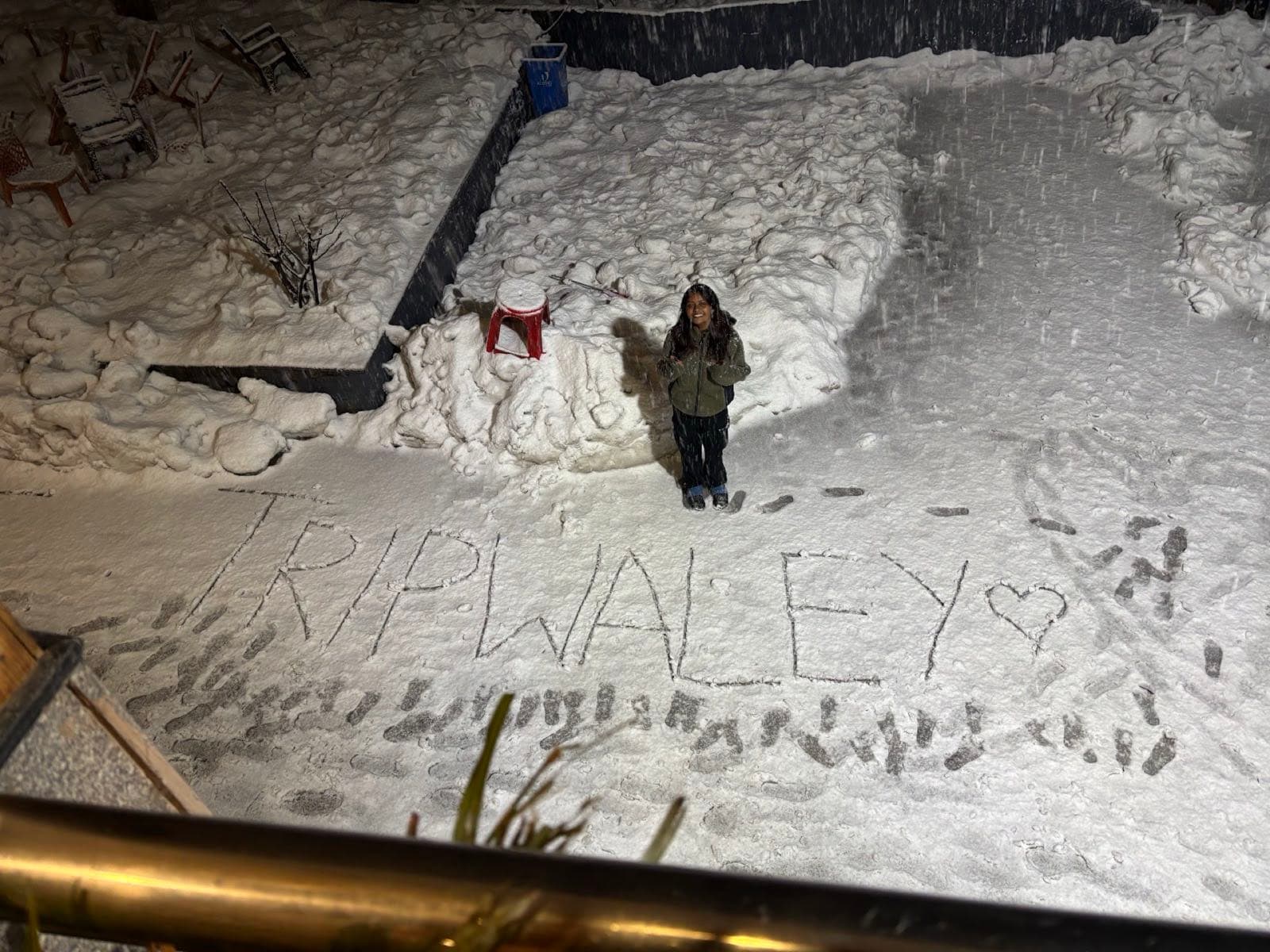
By the time I realized I was actually doing it — leaving Delhi behind with just a backpack and some vague directions from a company called TRIPWALEY — the mountains had already started calling. Not metaphorically. I mean, the signal dropped after Kangra.
The road climbed like a question that didn’t want an answer, curling toward McLeodganj — a place where monks, motorbikes, and mango cake all coexist in some beautiful, chaotic rhythm. I wandered into narrow lanes that smelled like butter tea and burnt incense. The Dalai Lama wasn’t there, but somehow his presence clung to the prayer wheels and soft-spoken cafes.
Everyone comes to McLeodganj looking for something. I didn’t know what I was after — maybe peace, maybe better Wi-Fi. What I found was a sky bruised pink at dusk, a warm bowl of thukpa, and the sound of silence between mountain breaths.
Then came Triund. Oh, Triund.
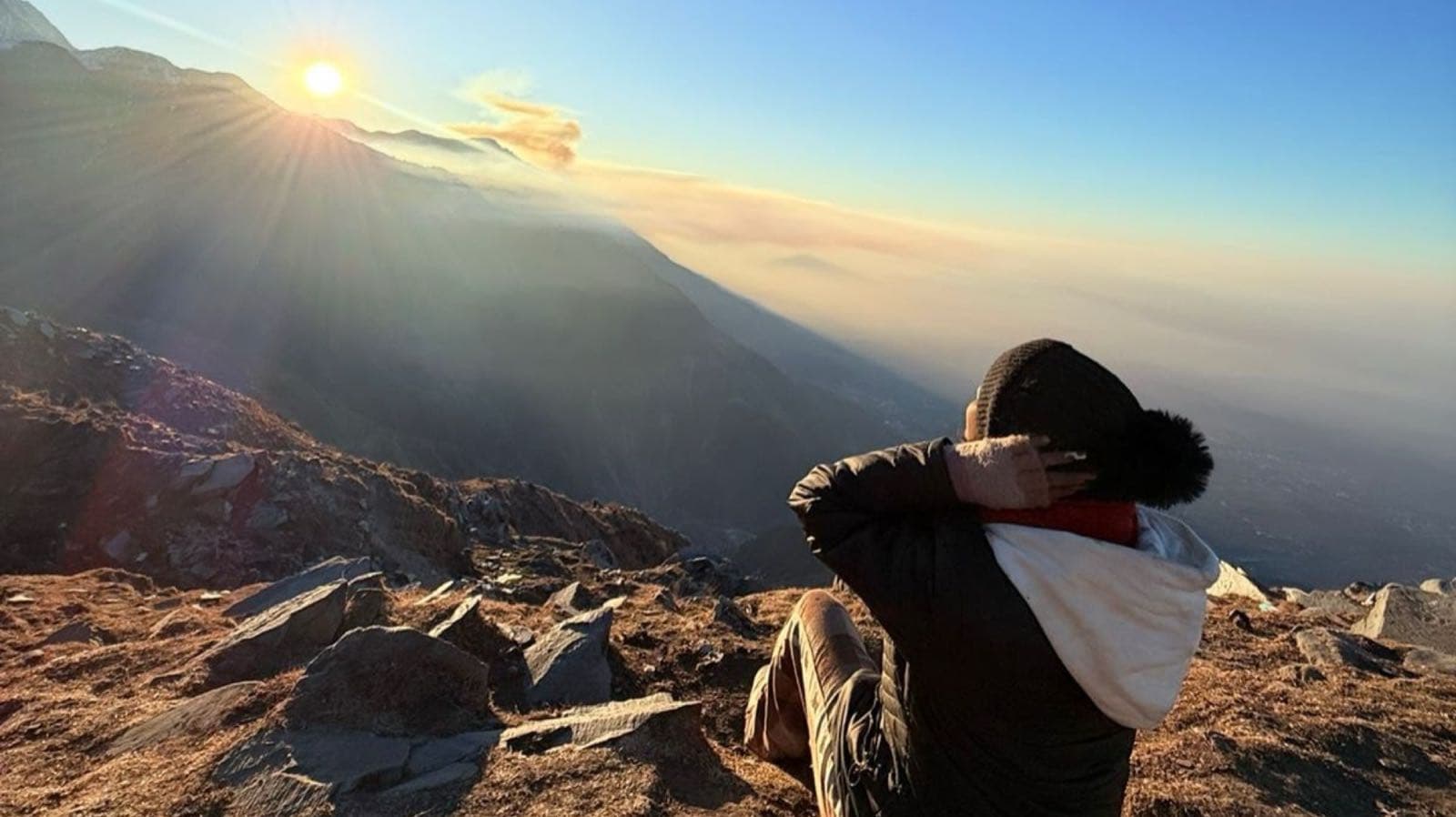
The trail began behind a small shack selling chips and borrowed trekking poles. It started innocent — a mild incline, birdsong, that kind of thing. But Triund doesn’t care about your urban stamina. It keeps climbing. And so did I, past tired legs and thoughts that wouldn’t shut up. Somewhere between the second maggi stop and the last ridge, everything fell quiet. Not because I made it — but because the view made me forget I hadn’t.
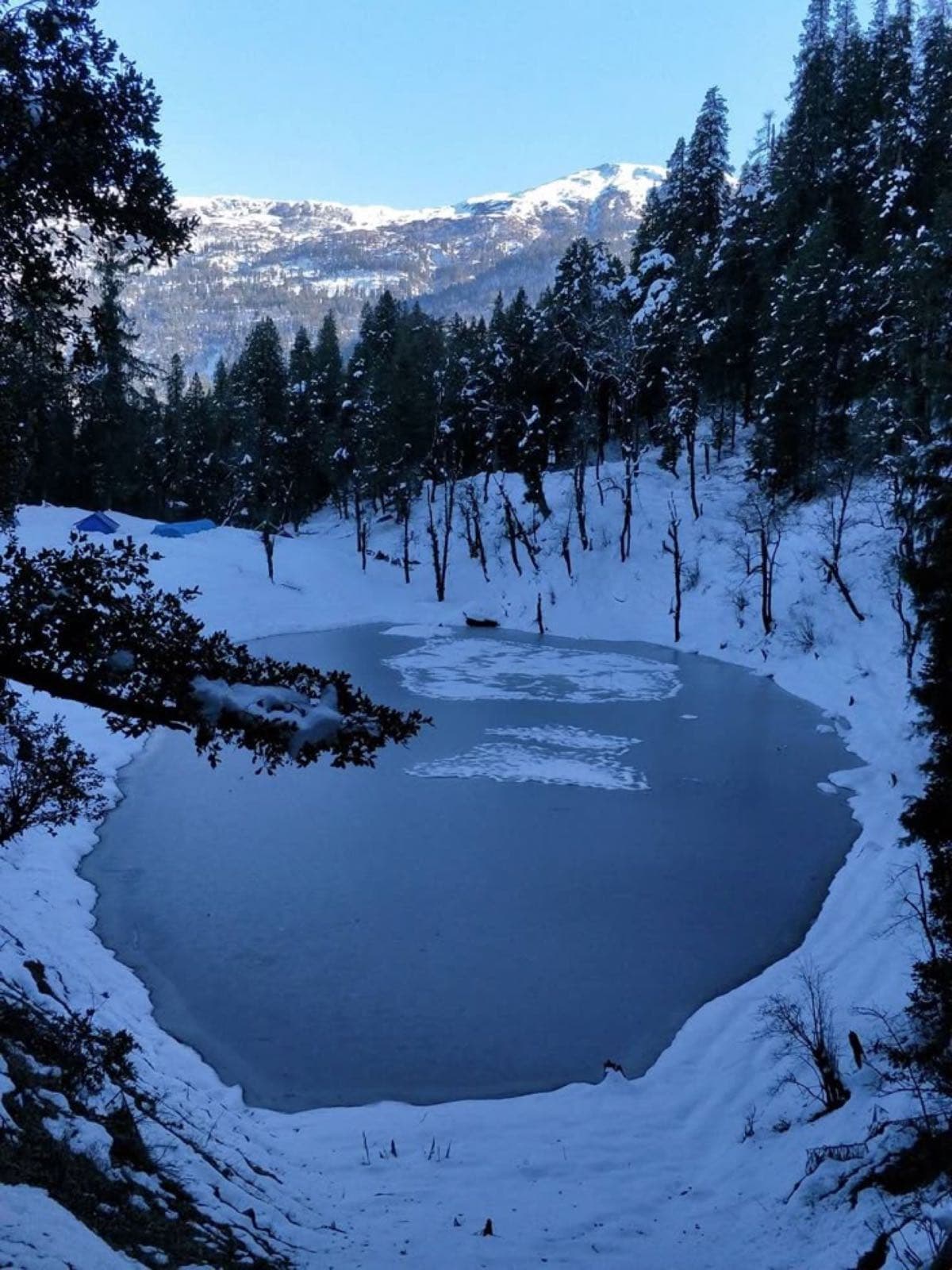
At the top, snow-dusted peaks stood around me like they were waiting for a secret to be told. I didn’t speak. I just stared.
We camped under stars too bright to photograph. My phone gave up trying. And so did I — on posting, checking, proving. That night, we all just existed: me, a few strangers, a dog ( Milky bar)stole my heart, and the mountains, humming lullabies no human could write.
The next morning, with sore knees and soothed hearts, we headed back. But returning didn’t mean stopping. Not on this trip.
Then we headed eastward to a place the locals call Jibbhi — though even locals look surprised when tourists show up there. Jibbhi is what happens when a forest decides to settle down. Wooden cottages lean into pine-covered hills, and waterfalls hide behind trails that look like they belong in bedtime stories.
There’s nothing to “do” in Jibbhi, which is exactly why you stay longer than planned. I stayed in a quiet homestay where the uncle made chai that tasted like cardamom and kindness. Nobody asked me where I was from or what I did. We just talked about weather and woodwork. At night, the river gurgled like it was chuckling at us city folks pretending we know anything about peace.
One morning, I wandered toward the Jibbhi Waterfall, tucked behind a mossy forest trail. It isn’t tall or dramatic — but it’s the kind of place that looks like a fairytale paused for a drink. The water tumbles over rocks like it has nowhere better to be, and you can sit on a cold boulder with your feet in the stream, watching sunlight filter through cedar branches like it’s got something to confess.
A local boy told me about Mini Thailand, a secret waterfall spot about a short trek from the village. The name felt ridiculous until I got there — narrow gorges, emerald water, and mossy cliffs that looked like they’d been carved by dreamers. I slipped off my shoes and stepped into the icy pool, where time cracked open just a little. No noise. Just water, wind, and the occasional bird daring to interrupt.
Later, I hiked a little toward Chehni Kothi, where the air gets thinner and older. The ancient watchtower stood like a forgotten poem — tall, quiet, and slightly leaning into the clouds. I sat nearby, eating leftover parathas and staring at nothing in particular.
I could’ve ended there. But the road — cracked, narrow, but persistent — pulled me towards Kasol.
Ah, Kasol. Equal parts myth and mystery. Israeli cafes, trance music wafting out of nowhere, tattooed backpackers who speak more Hebrew than Hindi, and that ever-present Parvati River — loud, unapologetic, wild. I didn’t party. I walked. I crossed rickety bridges. I dipped my feet into glacier water that hurt like honesty. I drank coffee with strangers who told me things they hadn’t told their families.
One of them said, “Kasol isn’t a place. It’s a pause.”
I believed him.
My trip ended not with a bang but with a barefoot walk through Manikaran Sahib, where steam rose from sacred waters and everything smelled like faith and fenugreek. I stood there, eyes closed, not praying — just listening. And somewhere in that warmth, I realized something:
The mountains never shout. They whisper. And if you’re lucky, you get quiet enough to hear them.
Postscript, or Whatever You Want to Call It
I booked this whole thing through a random site called Tripwaley. Didn’t think much of it at the time. But somehow, every stay felt like home, every route felt just rough enough to be real. Maybe they planned it that way. Maybe the mountains did.
Either way, I came back with dirty shoes, a heart full of wind, and stories I don’t know how to tell properly.
Except maybe like this.
go and see it